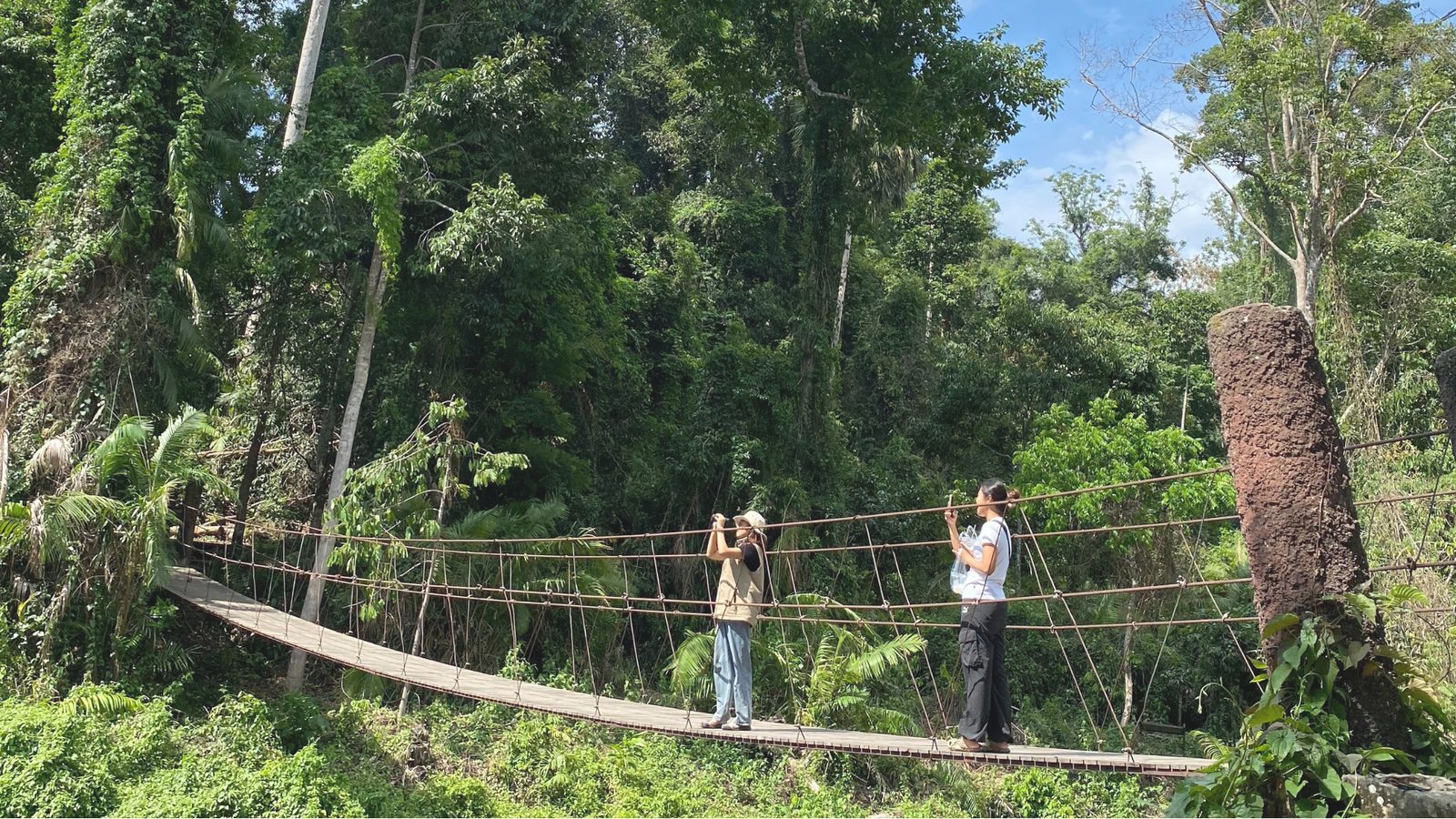
Khao Yai is the reason most of our guests come to Pak Chong — and the reason we never get tired of living here. It was Thailand's very first national park, declared in 1962, and today it's part of a UNESCO World Heritage cluster covering more than 2,000 square kilometres of forest. That's a lot of green. The good news: you don't need to rush it. Here is how we'd spend two slow days, with plenty of room to just sit and listen to the forest.
Before you go
The park's main gate is about a 40-minute drive from Chomklong, on the Pak Chong side (the northern entrance). A few things worth knowing before you set out:
- Go early. The gate opens at 6am. The light is soft, the air is cool, and the animals are out. By mid-morning the car parks at the famous waterfalls fill up.
- Bring cash for the entrance fee. Foreign visitors pay a park fee at the gate; Thai residents pay less. Keep your ticket — you may be asked for it inside.
- You need a vehicle. There's no public transport inside the park, and the distances between sights are long. If you don't drive, we can help you arrange a car and driver for the day.
- Dress in layers. Mornings can be genuinely cool up on the plateau, and afternoon rain is common in the green season.
Day one — waterfalls and viewpoints
Haew Suwat Waterfall
If the name sounds familiar, it might be from the film The Beach — this is the waterfall the characters leap from. Please don't leap. Do stand on the viewing deck, though, where the water drops about 20 metres into a pool ringed by forest. In the green season (roughly June to October) it's thunderous; in the cool season it's gentler and the surrounding trees turn.
Pha Diao Dai viewpoint
For the big view, drive up to Pha Diao Dai — a cliff edge at around 1,000 metres looking out over an unbroken sea of canopy. On a clear afternoon you can see weather moving across the forest from kilometres away. Bring a jacket; the wind up here has a bite.
Salt licks and watchtowers
Scattered through the park are salt licks — clearings where animals gather for minerals — each with a quiet observation tower. Late afternoon is the time. Sit still, keep your voice down, and you may see deer, gaur, or if you're very lucky, the gentle silhouette of a wild elephant at the treeline.
Day two — walking and wildlife
A guided trail
There are marked trails of varying lengths, from gentle hour-long loops to half-day treks. We always recommend going with a park guide for anything longer — not only is it safer, but a good guide will show you things you'd walk straight past: a hornbill nest, a column of marching termites, the claw marks of a sun bear on a tree.
Elephants on the road
Khao Yai is home to a wild elephant population, and at dusk they sometimes come down onto the park roads. It's magical and it's serious: keep your distance, stay in your car, switch off your headlights, and never block their path. They were here long before the road was.
Night safari
The park runs guided night drives where rangers sweep the verges with a spotlight. You might catch civets, deer, porcupines, and the green shine of nocturnal eyes in the dark. Book at the visitor centre earlier in the day.
The forest doesn't perform on schedule. Some days you'll see elephants; some days you'll see a beautiful empty road. Both are Khao Yai.
How we'd pace it from Chomklong
This is the part the guidebooks miss. You don't have to cram the park into a single exhausting day. Stay with us, drive in early, come back for an afternoon nap and a coffee in the garden, then head out again for the golden hour at a salt lick. Slow is the whole point.
When you're ready to plan, message us — we live ten minutes away and we're always happy to tell you where the elephants have been seen this week.